Why a 1–2 Hour Study Plan Works
A short study window forces prioritization. Instead of passive consumption, it promotes targeted learning and deliberate practice.
Core benefits:
- Reduces procrastination by limiting time scope
- Encourages high-focus sessions
- Fits realistically into busy schedules
- Supports long-term consistency
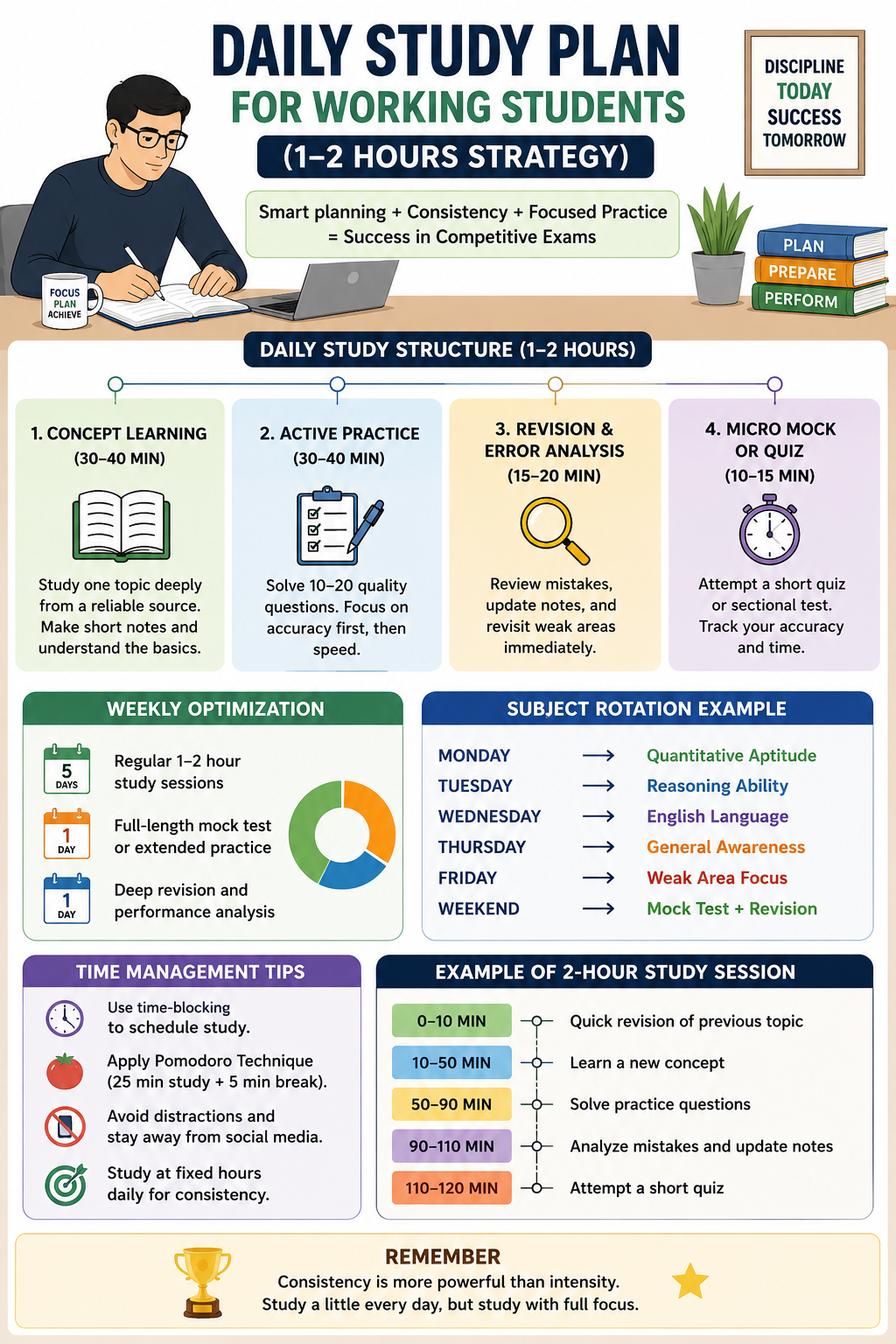
Ideal Daily Study Structure (1–2 Hours)
A well-defined structure prevents time leakage and keeps sessions outcome-driven.
1. Concept Learning (30–40 Minutes)
Focus on one topic only. Avoid switching between subjects.
- Study core theory from a trusted source
- Take brief, structured notes
- Identify key formulas or rules
2. Active Practice (30–40 Minutes)
Application transforms understanding into skill.
- Solve 10–20 quality questions
- Focus on accuracy first, then speed
- Mark difficult questions for review
3. Revision & Error Analysis (15–20 Minutes)
Improvement comes from correction, not repetition.
- Review mistakes immediately
- Update notes with weak areas
- Revisit previously studied topics
4. Micro Mock or Quiz (10–15 Minutes)
Short tests build exam temperament without time pressure.
- Attempt sectional quizzes
- Practice under a timer
- Track accuracy and time spent
Weekly Optimization Strategy
Daily effort needs weekly calibration to remain effective.
Suggested approach:
- 5 Days: Regular 1–2 hour study sessions
- 1 Day: Full-length mock test (or extended practice)
- 1 Day: Deep revision and performance analysis
This cycle ensures continuous feedback and adjustment.
Subject Rotation Strategy
Avoid studying the same subject every day. Cognitive fatigue reduces efficiency.
Example rotation:
- Day 1: Quantitative Aptitude
- Day 2: Reasoning
- Day 3: English
- Day 4: General Awareness
- Day 5: Weak Area Focus
This method maintains engagement and balanced coverage.
Time Management Techniques for Working Students
Time scarcity demands precision.
Effective techniques:
- Use time-blocking instead of open-ended study
- Apply the Pomodoro method (25–5 cycles)
- Study at fixed hours (early morning or late evening)
- Eliminate distractions during the study window
Common Mistakes to Avoid
- Studying without a clear daily goal
- Skipping revision due to time constraints
- Consuming excessive content without practice
- Ignoring mock tests completely
- Switching resources frequently
Each of these reduces efficiency and delays measurable progress.
Practical Example of a 2-Hour Study Session
- 0–10 min: Quick revision of previous topic
- 10–50 min: Learn a new concept
- 50–90 min: Solve practice questions
- 90–110 min: Analyze mistakes
- 110–120 min: Attempt a short quiz
This structure ensures learning, application, and evaluation within a single session.
Final Insight
Consistency outweighs intensity for working students. A disciplined 1–2 hour daily routine, supported by structured planning and regular evaluation, creates cumulative gains over time. Missing a day occasionally is not critical; abandoning the system is.
The objective is not to study more hours—it is to make each hour produce measurable output