Lack of a Structured Study Plan
A common issue is studying without a clear roadmap. Random topic selection leads to uneven preparation and missed syllabus coverage.
What goes wrong:
- Important topics get ignored
- Time allocation becomes inconsistent
- Revision is often neglected
Better approach:
Create a realistic timetable with defined goals, balanced subject coverage, and dedicated revision slots.
Ignoring the Exam Pattern and Syllabus
Many students start preparation without thoroughly understanding the exam structure.
What goes wrong:
- Focus on irrelevant topics
- Misjudgment of question difficulty
- Inefficient preparation strategy
Better approach:
Analyze the syllabus and previous year papers to align preparation with actual exam requirements.
Over-Reliance on Passive Learning
Simply watching lectures or reading books without active engagement reduces retention.
What goes wrong:
- Weak problem-solving ability
- Poor memory retention
- Lack of application skills
Better approach:
Combine learning with practice—solve questions, take notes, and revise actively.
Avoiding Mock Tests
Fear of low scores often prevents students from attempting mock tests.
What goes wrong:
- No performance benchmarking
- Weak time management
- Lack of exam temperament
Better approach:
Take regular mock tests and treat them as learning tools rather than performance judgments.
Not Analyzing Mistakes
Attempting tests without reviewing errors limits improvement.
What goes wrong:
- Repeating the same mistakes
- Weak areas remain unaddressed
- False sense of preparation
Better approach:
Spend time analyzing incorrect answers and understand the reasoning behind them.
Poor Time Management
Managing time effectively during preparation and exams is critical.
What goes wrong:
- Incomplete syllabus
- Inability to finish exam on time
- Increased stress levels
Better approach:
Practice with timers and prioritize questions based on difficulty.
Using Too Many Resources
Switching between multiple books and platforms creates confusion.
What goes wrong:
- Lack of depth in any subject
- Constant switching reduces focus
- Time wastage
Better approach:
Stick to limited, high-quality resources and revise them thoroughly.
Neglecting Revision
Revision is often underestimated despite being essential for retention.
What goes wrong:
- Forgetting previously studied topics
- Reduced confidence during exams
- Inconsistent performance
Better approach:
Follow a structured revision cycle—daily, weekly, and monthly.
Ignoring Health and Well-being
Physical and mental health directly impact performance.
What goes wrong:
- Burnout and fatigue
- Reduced concentration
- Increased anxiety
Better approach:
Maintain proper sleep, nutrition, and short breaks for sustained productivity.
Final Thoughts
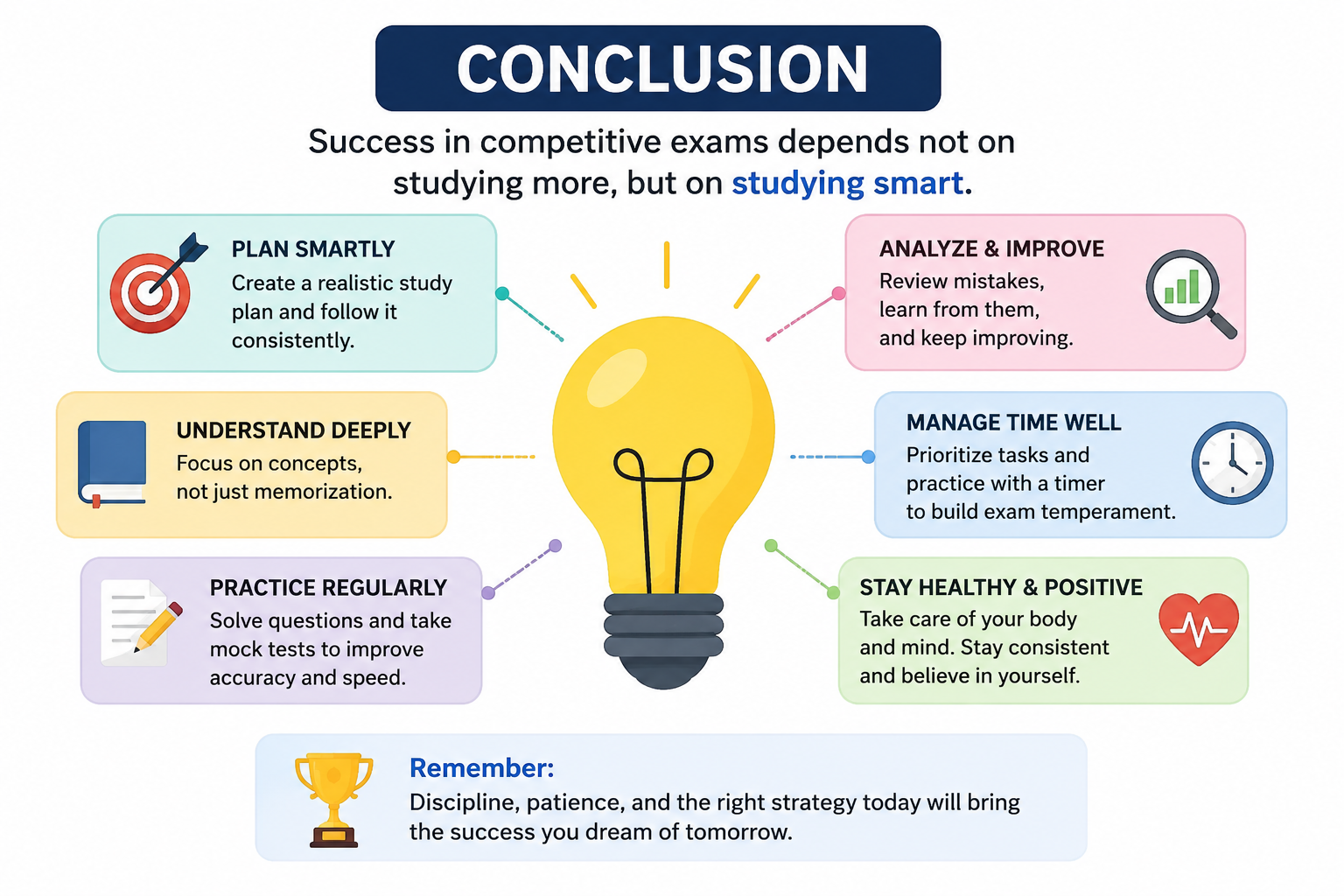
Mistakes in competitive exam preparation are common, but repeating them consistently can limit success. A focused strategy that combines structured planning, active learning, regular testing, and consistent revision creates a strong foundation.
Avoiding these pitfalls does not require extraordinary effort—just awareness and disciplined execution. Small corrections in approach often lead to significant improvements in results.